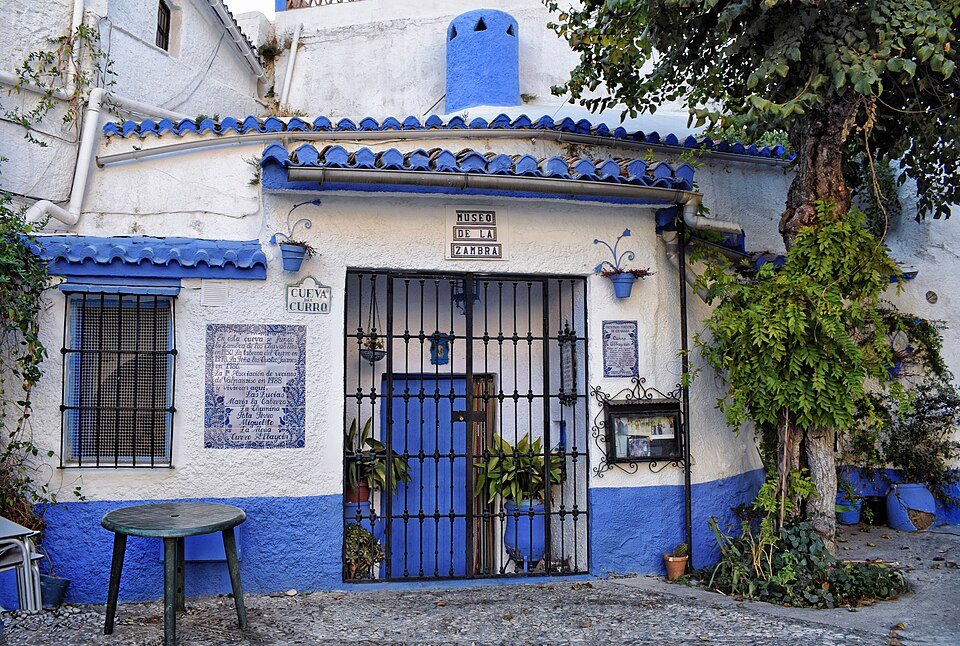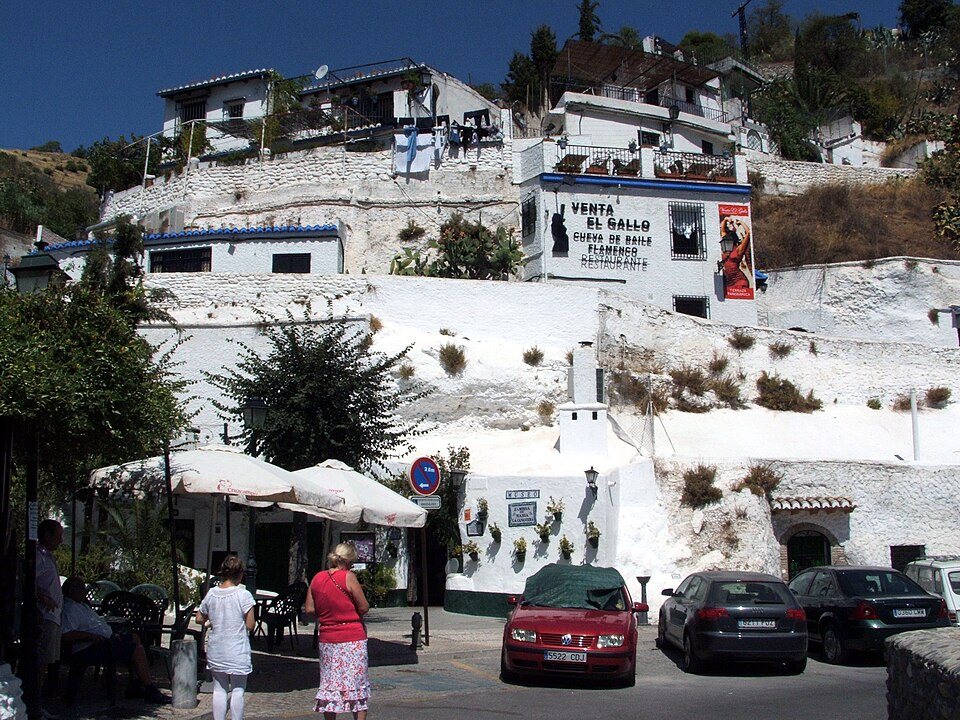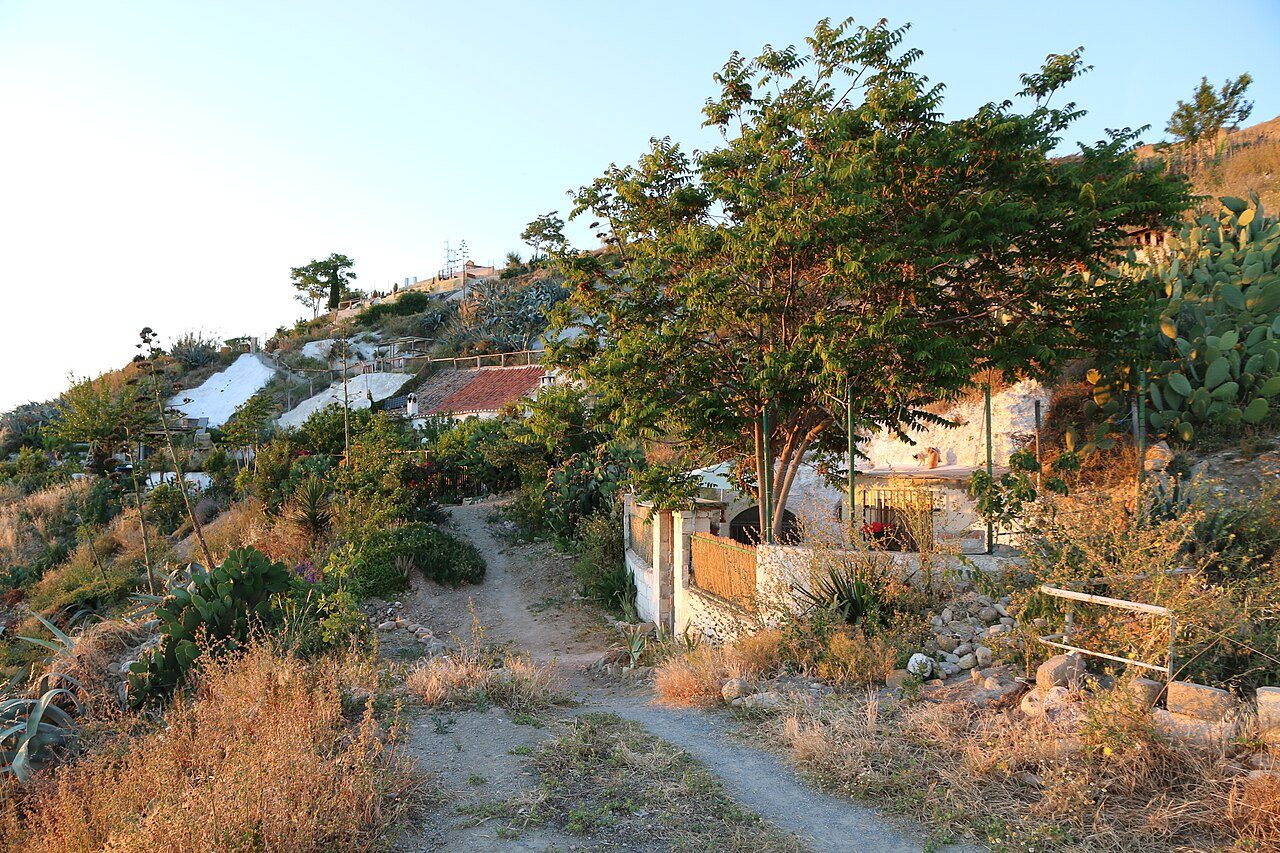
Every night in Sacromonte, a string of whitewashed caves along the Barranco de los Negros fills with tourists watching flamenco. The posters all say more or less the same thing: zambra, tablao, cueva, auténtico. What they don't say is how much the thing you're about to see differs from cave to cave, or that the word "zambra" itself describes a real, specific tradition that has very little to do with most of what's being sold under its name tonight.
That doesn't make the shows fake, exactly. It makes them a product built on top of a real history, sold at a density that the original tradition never had and never needed.
What a zambra actually was
The zambra gitana developed in Granada's Romani community, concentrated in Sacromonte since at least the sixteenth century, as a form distinct from the flamenco performed in theaters and tablaos elsewhere in Andalusia. The caves were homes, not venues. Families held zambras for baptisms, weddings, and other life events, and neighbors who could sing or dance took part. There was no stage in the theatrical sense — dancers performed on the flat swept-earth floor of the cave, close to the audience, with none of the raised platforms or lighting rigs that define a modern show.
The repertoire has its own vocabulary too. Granada's Romani families kept and still perform the cachucha, the mosca, and the alboreá — a wedding dance with particular ritual weight, traditionally performed only within the community. Some of these forms are rarely danced in public at all, and what you see in a commercial tablao is typically a more standard flamenco repertoire of bulerías, tangos, and alegrías, dressed in zambra styling.
This isn't a minor technicality. It's the difference between watching a tradition and watching a show that borrows its name and setting.
How the caves became a tourist circuit
Sacromonte's shift toward performance for outsiders goes back further than you'd think — nineteenth-century travelers and early tourists were already being brought to the caves to watch dancing, and some of the same cave-houses operating today trace their lineage back generations in the same families. What's changed is the scale and the mechanics: multiple venues now run several shows a night, often timed to receive coach groups arriving directly from the Albaicín or from hotels across the city, with pickup and return built into the package.
That volume has effects. A tablao doing several shows nightly for groups needs a program that's tight, repeatable, and legible to an audience that may know nothing about flamenco — which tends to mean a more generic flamenco set rather than a deep dive into zambra-specific forms. None of this is a scandal. It's just worth knowing before you buy a ticket for "authentic zambra" and get a well-executed flamenco show that happens to be staged in a cave.
What actually varies between venues
The caves along the Camino del Sacromonte and around Cuesta del Chapiz differ in several concrete ways, and these are the things worth asking about rather than relying on the word "authentic" in any brochure:
- Family lineage. Some venues are still run by families with a documented, multi-generation history in Sacromonte's Romani community. Others are commercial operations, sometimes well-run, with no particular connection beyond the location.
- Group size and format. A cave seating a few dozen people with performers a few feet away gives you a completely different experience than a room built to process coach groups in shifts.
- Whether a walk is included. Many packages bundle the show with a short guided walk through the Albaicín or along the Paseo de los Tristes beforehand, which is pleasant but means the "show" portion of the night may be shorter than it looks on paper.
- Live versus recorded music. This should be a non-negotiable for any show calling itself flamenco; it's worth confirming rather than assuming.
⭐ If you want something closer to the original form, ask specifically whether the program includes alboreá or other Romani-specific pieces, rather than asking if the show is "authentic" — a word that gets applied to everything regardless of content.
Getting there and what to expect on the ground
Sacromonte sits above and east of the Albaicín, reached on foot via a steep climb from the Carrera del Darro or the Cuesta del Chapiz, or by local minibus. The walk up is unlit in places and uneven underfoot, which matters if you're going for a night show and planning to walk back down afterward.
⚠️ The caves are residential as well as commercial — people live along this same stretch — so venues operate on their own schedules and bookings are generally necessary rather than optional, especially for anything with a known name or family history. Go through the venue directly or a reputable agent, confirm what's included, and treat any price or seating-time claim you read elsewhere, including here, as something to verify with the operator rather than rely on.
The Sacromonte Abbey and the small museum dedicated to the neighborhood's cave-dwelling history sit further up the hill past most of the tablaos, and they're a useful stop if you want context before or after a show — they cover the geology and social history of cave-living in the area in more detail than any tablao program will.
If your main interest in Granada is flamenco rather than the caves specifically, it's worth comparing a Sacromonte night against a tablao in the city center, where the setting is more conventional but the acts are sometimes drawn from the same pool of local musicians and dancers. Neither is more or less "real" flamenco — they're different stagings of overlapping traditions, and Sacromonte's specific claim is geographic and historical rather than a guarantee of purity. Going in with that distinction in mind is the difference between being disappointed by a perfectly good show and actually enjoying it for what it is.
In pictures