San Jerónimo sits a ten-minute walk from the cathedral, past the Hospital Real and into a stretch of the city that belongs to the university rather than the tour groups. Most visitors to Granada never get here, which is the point. You come for a Renaissance church with one of the most overworked altarpieces in Andalusia, two cloisters of different temperaments, and a general silence that the Alhambra and the Capilla Real simply can't offer anymore.
A monastery founded before the walls fell
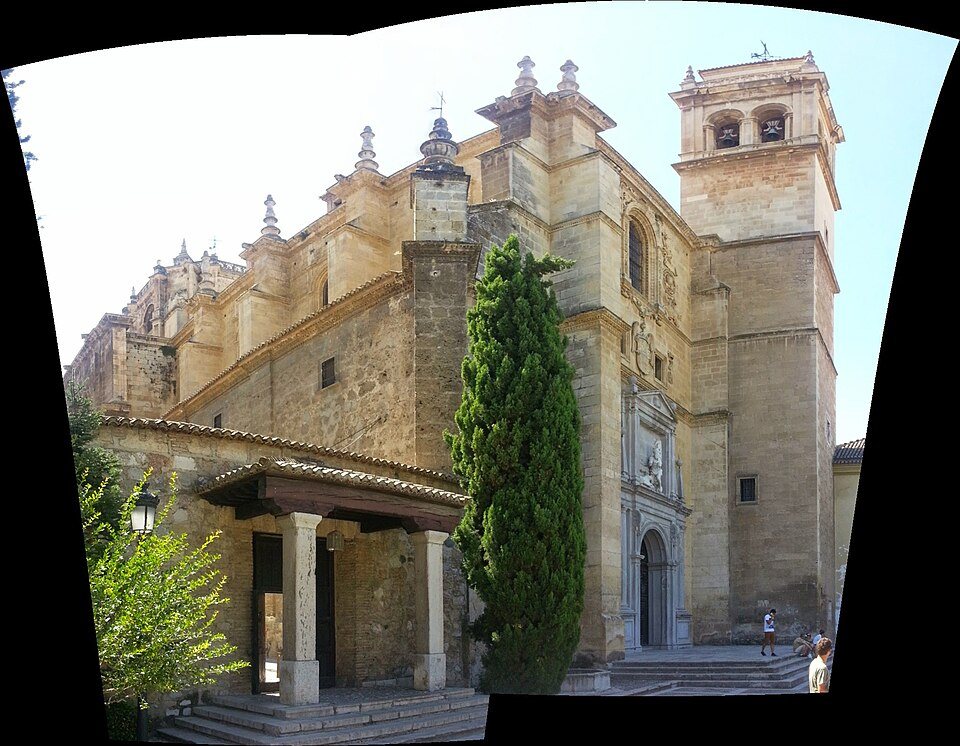
The order of St. Jerome had royal backing from the start. Ferdinand and Isabella founded this community in 1492, during the siege, while the court was camped at Santa Fe outside the city. Once Nasrid Granada surrendered, the monastery moved into the city and construction began on a permanent site. Work ran through the early sixteenth century and most of what you see — the church in particular — is the work of Diego de Siloé, the same architect responsible for the cathedral's interior. It shows: the proportions are confident and the stonework is crisp in a way that a lot of Granada's older fabric, patched and repatched over centuries, is not.
The monastery's fortunes dipped hard in the early 1800s. French troops occupying the city during the Napoleonic Wars used the complex as a barracks and stabled horses in parts of it, and the building took real damage — carved stonework was defaced, and some of the furnishings were lost or scattered. What's been restored since is a reconstruction as much as a survival, and it's worth knowing that walking through: this calm is recovered, not original and undisturbed.
The retable and the Gran Capitán
The main reason to go inside is the high altar. It's enormous — tier after tier of carved and painted panels rising almost to the ceiling, gilded and crowded with saints and scenes in a way that's hard to take in on one pass. The work involved several hands, including the painter and sculptor known as Jacobo Florentino, and it's one of the fuller expressions of Spanish Renaissance church decoration you'll find in the city, busier and more literal than the restrained classicism of the architecture around it.
Buried near the altar is Gonzalo Fernández de Córdoba, the military commander known as the Gran Capitán, along with his wife María de Manrique. He was the general who led Spanish forces in Italy in the late fifteenth and early sixteenth centuries and became one of the most mythologized soldiers of the period — the monastery was effectively built around the idea of housing his tomb, and the inscriptions and heraldry around it make the point that this was meant to be a shrine to a national hero as much as a place of worship.
⭐ Don't rush the retable from the center aisle. Walk up close to one side and look at the lower, smaller panels — they're more legible and less restored-looking than the dramatic upper tiers, and easier to actually read as individual scenes rather than as a wall of gold.
Two cloisters, two moods
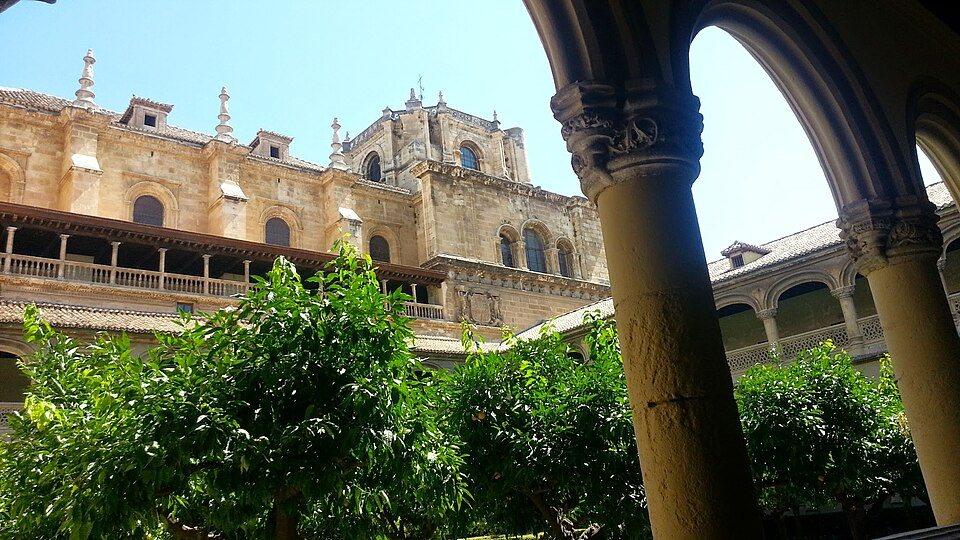
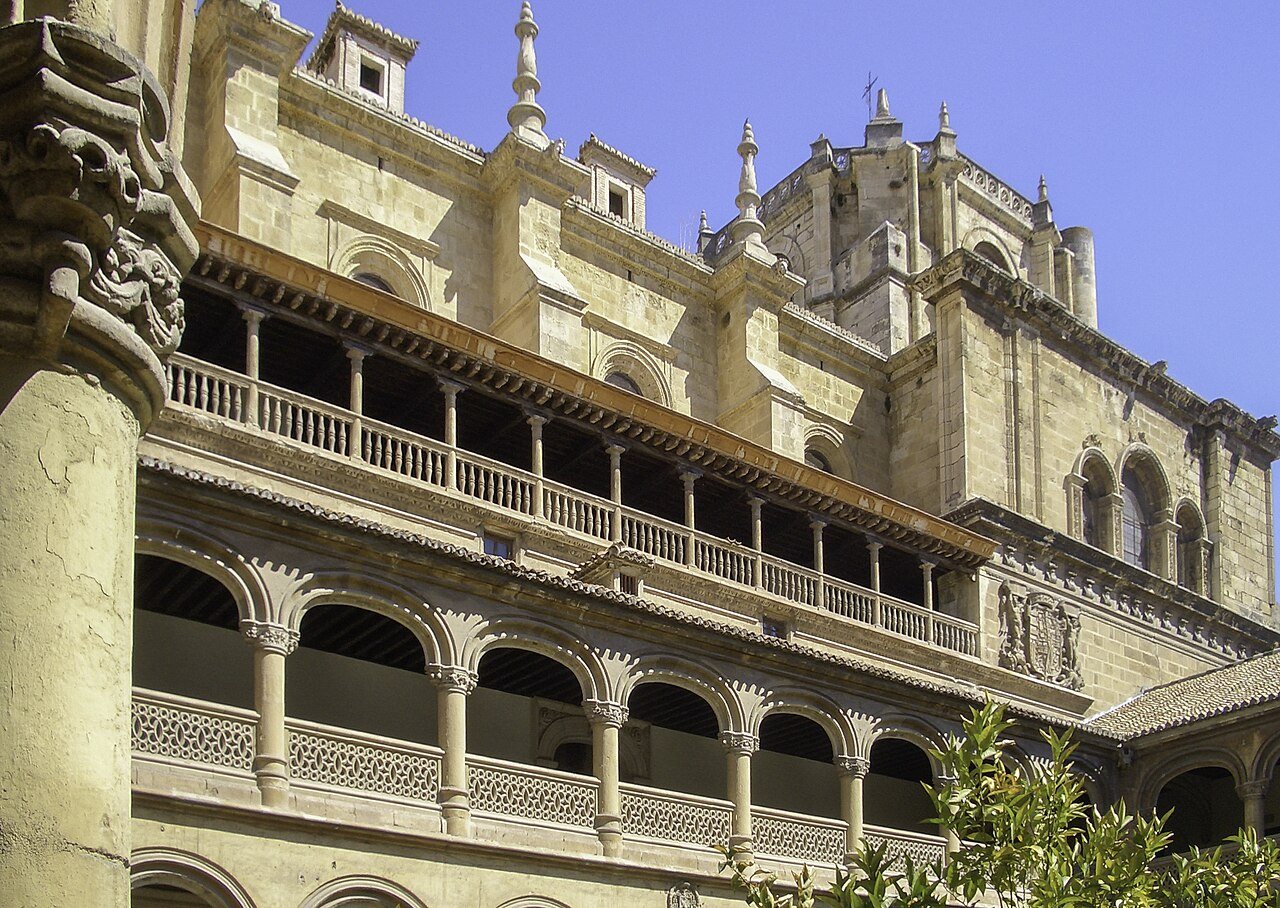
The monastery has a pair of cloisters and they don't feel alike. The smaller one is plain, almost severe, built for the daily business of monastic life. The larger — the Claustro Principal — is a different register entirely: two stories of arcades, decorative carving along the upper gallery, and orange trees planted in the open courtyard that have had a long time to grow. It's this larger cloister that gives the place its reputation as the quietest in the city center. There's no competing noise from street vendors or tour guides doing commentary in four languages, which is the normal soundtrack of the Albaicín or the approach to the Alhambra on a Saturday.
⚠️ "Quiet" doesn't mean empty on all days — this is still a working community, and parts of the monastery remain closed to visitors because they're in active religious use. Don't expect free run of the whole complex; the visitable route is clearly bounded, and that's normal rather than a sign you're missing something.
Getting there and when to go
San Jerónimo is an easy walk from the cathedral area or from Plaza de la Universidad, flat the whole way, which makes it a good stop to pair with a slower morning rather than a dash between major sights. It doesn't connect naturally to an Alhambra visit by foot — that's a separate trip across town, best planned with Granada's buses or a taxi in mind if you're doing both in one day.
Because the monastery runs on its own visiting hours and sometimes limits access during services, it's worth checking current hours directly before you go rather than assuming a fixed schedule — Granada's religious sites adjust for feast days and liturgical calendars more than museums do. There's no advance booking system to worry about here, which is itself a small relief after queuing for the Alhambra.
If you're building a Renaissance-architecture thread into your trip, San Jerónimo pairs naturally with the Cartuja monastery on the other side of the city — the two were built in roughly the same period but head in opposite decorative directions, with Cartuja's sacristy going almost baroque with excess where San Jerónimo stays comparatively disciplined outside and saves its intensity for the altar alone. Seeing both in the same visit, even split across two days, makes the contrast obvious in a way that reading about it doesn't.
For a broader sense of where this fits into a Granada visit, see the sights overview or one of the suggested itineraries — San Jerónimo tends to work best slotted into a slower, second- or third-day pace rather than a first-day checklist, precisely because its appeal is the absence of a crowd to fight through.
In pictures