Most people walk into the Alhambra expecting the Palacios Nazaríes and treat the Alcazaba as a warm-up act. That's backwards. The Alcazaba is older than everything else on the hill, built for a harder purpose than poetry carved into plaster, and it's the one part of the complex where you can still read the site as a military problem: how do you hold a narrow spur of rock above two rivers, with a city depending on you to do it.
The name itself just means "citadel" in Arabic — al-qasbah — and that's what this was before it was anything else. Long before the Nasrid sultans built their palaces next door, this western tip of the Sabika hill had fortification on it, likely going back to the Zirid period in the 11th century. The Nasrids, starting with Muhammad I in the 13th century, rebuilt and expanded what they inherited into the fortress whose walls are still standing. Everything else at the Alhambra — the palaces, the gardens, the summer retreat at the Generalife — came after. The Alcazaba came first because without it, there was no reason to build anything else up here.
What's actually left to see
Don't go looking for roofed rooms or decorated ceilings. The Alcazaba today is largely a ground plan: the footprints of barracks, cisterns, a bath, and storage rooms, worn down to knee-height walls in most places. If you've read about the elaborate stucco and tilework in the Nasrid palaces and arrive expecting something similar, you'll be disappointed, and that disappointment is a sign you've misunderstood what this building was for. Soldiers lived here. Their walls were whitewashed, not carved.
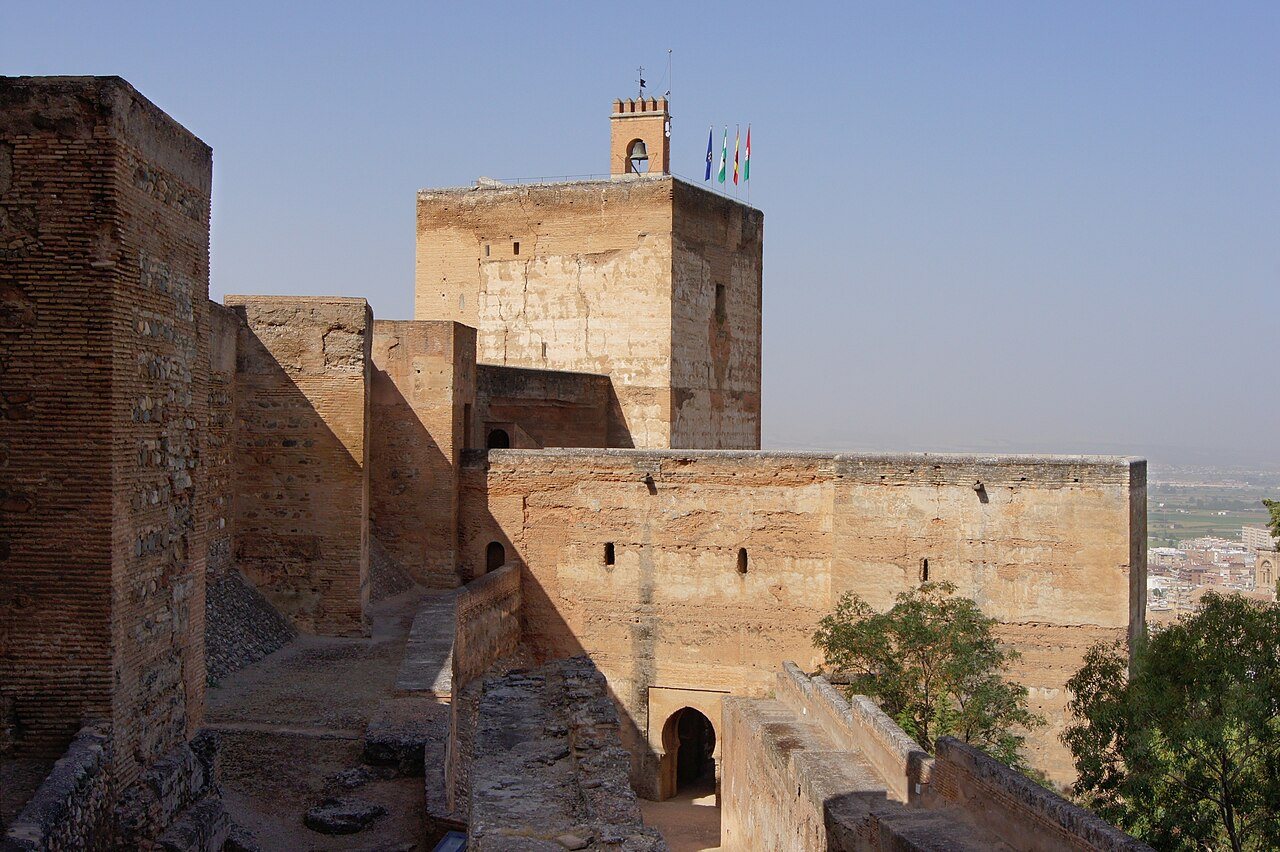
What does survive, and survives impressively, are the towers. The Torre del Homenaje (Keep Tower) and the Torre Quebrada (Broken Tower) anchor the fortress at different points, but the one everyone remembers is the Torre de la Vela — the Watch Tower, or Bell Tower. This is the tallest point in the Alcazaba and the spot with the single best panorama on the entire Alhambra hill. From its platform you look straight down into the Albaicín's white rooftops, across to the Sierra Nevada on a clear day, and along the full run of the Alhambra's outer walls toward the palaces and the Palacio de Carlos V.
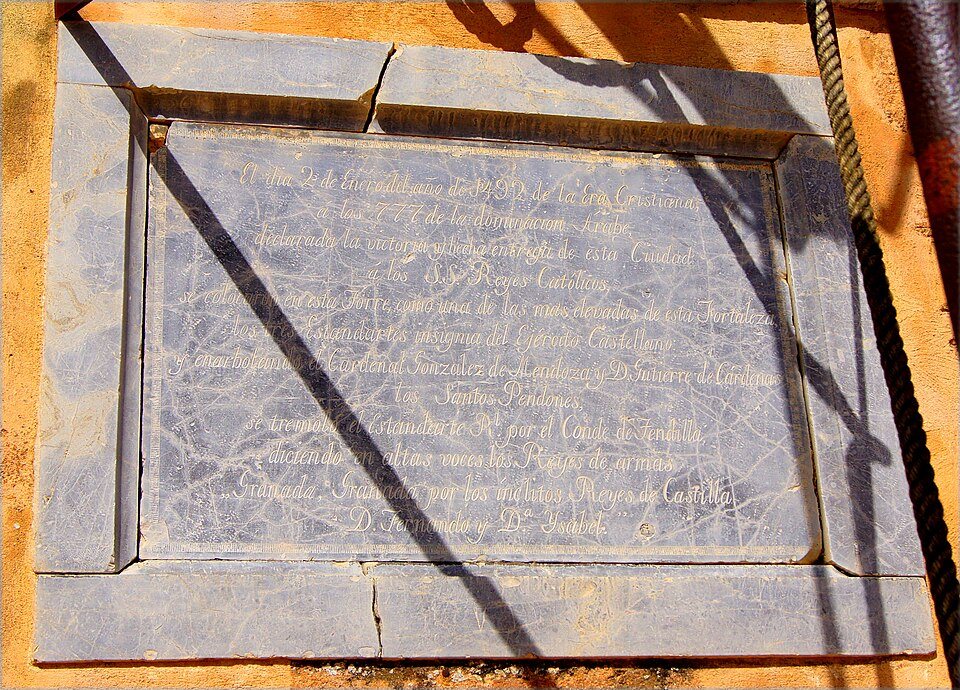
⭐ The bell on top of the Torre de la Vela isn't decorative. It's rung on January 2 each year to mark the anniversary of the city's 1492 surrender, and historically it was used to signal irrigation schedules to farmers working the Vega, the agricultural plain below the city. It's one of the few functioning links between the fortress's original military role and present-day Granada.
A fortress built to be seen from the city, not just over it
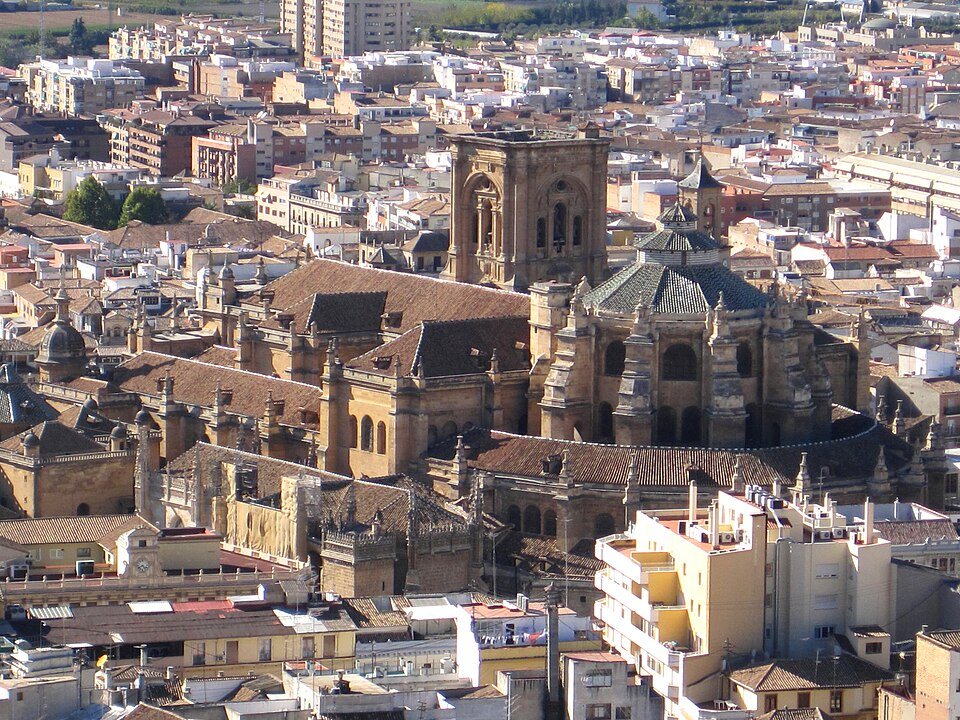
Stand at the Mirador de San Nicolás across the valley and look back at the Alhambra, and the Alcazaba is the part that reads most clearly as a fortress — blunt, crenellated, deliberately plain compared to the delicate arcades of the palaces beside it. That contrast was intentional. The Nasrid rulers needed the Alhambra to project two different messages at once: refinement and permanence to courtiers and visiting dignitaries inside the palace walls, and raw defensibility to anyone looking up at the hill from the city or from an approaching army. The Alcazaba carried the second message. Its walls are thick, its towers are blunt and square rather than ornamental, and its position on the hill's western tip put it between the city and any force approaching from that direction.
This is also the oldest part of the Alhambra in a literal, archaeological sense — excavations here have turned up material predating the Nasrid dynasty, part of why historians treat the Alcazaba as evidence that this hill was fortified in some form well before the Nasrids made it their capital in the 13th century. The palaces are the part of the Alhambra that gets photographed; the Alcazaba is the part that explains why the hill was chosen in the first place.
Practical notes for visiting
The Alcazaba is included in the general Alhambra admission and sits at the start of most visitors' routes through the monument, reached before or after the Nasrid palaces depending on which entrance and time slot you're assigned. Routes and entry points at the Alhambra are managed tightly and change with the season, so check the current mechanism for tickets and timed entry directly with the Alhambra's official booking system rather than relying on a fixed schedule — slots sell out, particularly in spring and early autumn, and the entrance structure has changed more than once in recent years.
- ⚠️ The climb to the top of the Torre de la Vela involves a narrow spiral staircase with uneven, worn steps. It's not accessible for wheelchairs or strollers, and it gets crowded at the top — there's only so much platform space for the view everyone wants.
- ⭐ Early morning light does more for the Alcazaba's stone walls than midday sun, which flattens the texture of the ramparts. If your entry slot gives you a choice, take the earlier one.
- There's very little shade across the open ground of the fortress itself. Granada's summer sun is not gentle, and the Alcazaba has none of the covered galleries you'll find in the palaces.
Why the layers matter
It's easy to walk through the Alcazaba's low stone walls without registering that you're looking at a palimpsest — Zirid foundations under Nasrid rebuilding under later Christian-era modifications, since the fortress continued to be garrisoned and adjusted well after the end of Muslim rule in Granada. The 1492 handover of the city came with surrender terms that promised the Muslim population continued rights to their religion, property, and customs; those terms were not honored for long, and within a decade the Castilian crown had reversed course on religious tolerance and began forced conversions and expulsions. The Alcazaba's later Christian-era use — garrisoned, patched, partly repurposed — sits on top of that history rather than apart from it. None of this is signposted in detail at the site itself, which is part of why it's worth knowing before you go rather than trying to piece it together from a plaque at the base of a tower.
Pair the visit with the rest of the hill in whatever order your ticket allows, and if you want a fuller sense of how the Alcazaba fits into the broader site, the itineraries section lays out a few ways to sequence it with the palaces and gardens so you're not backtracking across the complex in the heat.
In pictures