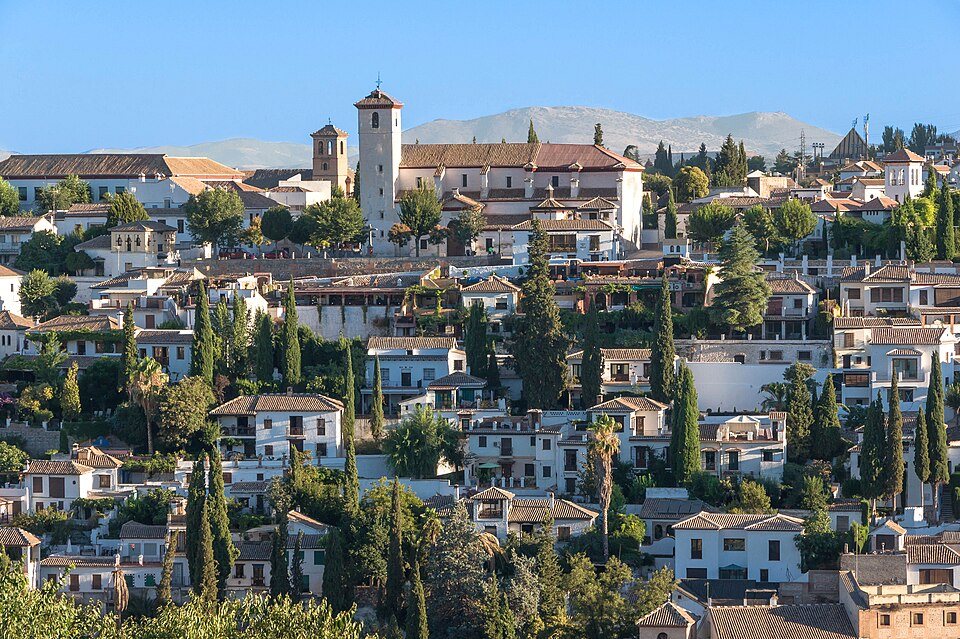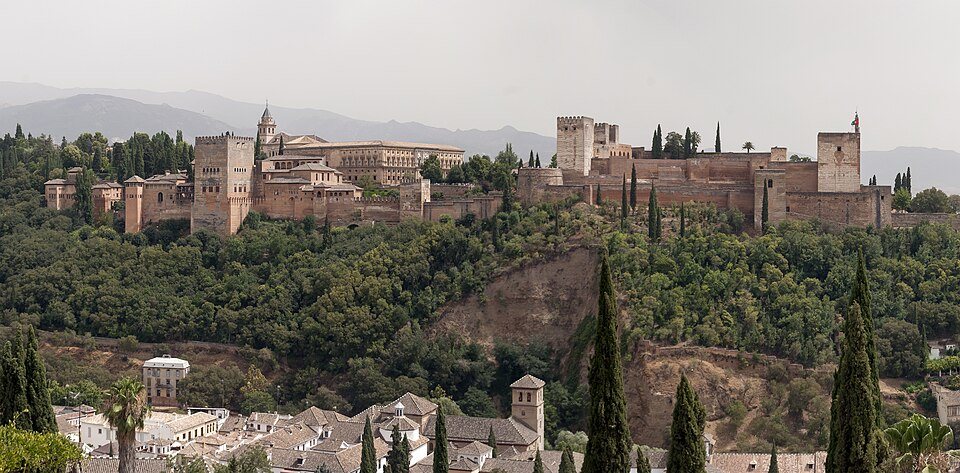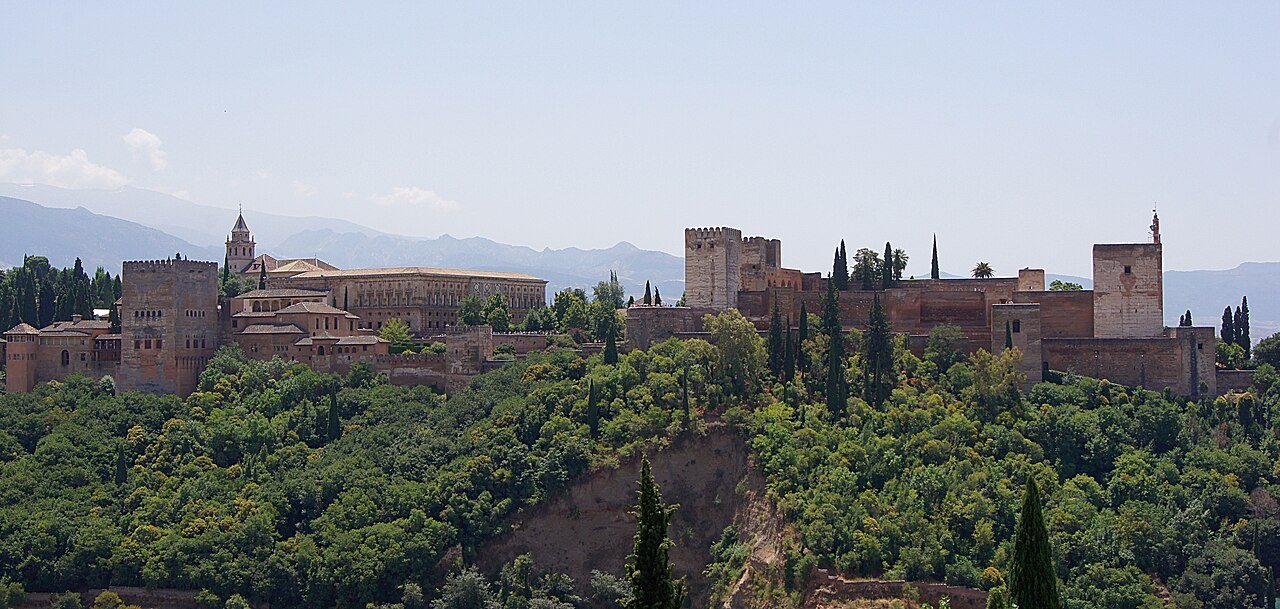
Everyone who visits Granada is told to go to Mirador San Nicolás at sunset, and everyone is right to go once. But the square fills up an hour before the light does, street vendors work the crowd, and a guitarist is usually competing with three other guitarists for the same tourists. It's a genuinely good view. It is also the single most photographed spot in the Albaicín, which means it's the one place in the neighborhood where you won't have a moment to yourself. The Albaicín has other miradores, some just a few minutes' walk away, that give you the same rooftops and the same Alhambra silhouette without the audience.
Why the crowd only goes to one place
Mirador San Nicolás gets the traffic because it's on the main tourist path up from Carrera del Darro, it's flat and open, and every guidebook and every Instagram geotag points at it. The Albaicín, though, is a hillside of narrow lanes (cármenes, as the walled houses with gardens are called) that climb and double back constantly, and the terrain itself throws up viewpoints all over the quarter. Most visitors don't wander far enough off the main route to find them, because the streets are genuinely confusing and phone signal is unreliable once you're deep in the old quarter. That confusion is exactly what keeps the other miradores empty.
⭐ Download or screenshot a map before you climb. Relying on live GPS in the Albaicín is a common way to end up back where you started.
Mirador de San Cristóbal
Higher up the hill and further north than San Nicolás, San Cristóbal looks at the Alhambra from a different angle and takes in more of the Albaicín's own rooftops in the foreground, plus a wider slice of the Vega, the fertile plain beyond the city. It's reached by a stiffer climb, which is precisely why coach groups don't bother with it. The payoff is a view that includes the Alhambra without putting it dead center, so you get a sense of how the fortress sits in the landscape rather than just a postcard crop of it. Go in the morning if you want the sun behind you rather than in your eyes; many people only consider this a sunset spot and the morning light gets ignored entirely.
Mirador de San Miguel Alto
This is the one locals mention when they want to send someone away from San Nicolás. It sits near the old church of San Miguel Alto, right at the top edge of the Albaicín, and the climb is long enough that casual sightseers turn back. What you get for the effort is a near-360-degree view: the Alhambra and Generalife gardens to the south, the Sacromonte caves and hillsides to the east, and on a clear day the Sierra Nevada beyond. There are benches, there is usually space to sit down, and there is rarely anyone selling anything. ⚠️ The approach involves steep, unlit stretches of street — this is not a place to aim for after dark unless you already know the route well, and even then a flashlight on your phone is worth having.
The small, unnamed ones
Not every good view in the Albaicín has a name or a bench. Several of the quarter's placetas — small plazas that interrupt the street grid — open onto gaps between houses where the Alhambra appears unannounced. Plaza del Salvador, Placeta de San Miguel Bajo, and the open ground around the Cuesta de las Tomasas all offer this kind of accidental viewpoint. None of them are destinations in their own right; they're places you pass through on the way to something else and happen to look up. That's rather the point. If you spend an afternoon just walking the Albaicín's lanes without a fixed itinerary, you will find two or three of these on your own, and they'll likely be the ones you remember, because nobody told you to look.
Sacromonte's other angle
Across the ravine from the Albaicín, the Sacromonte hillside gives you the Albaicín itself as the view, with the Alhambra visible off to one side rather than head-on. The cave district here was historically associated with Granada's Romani community and remains known for its flamenco venues cut into the hillside. Walking the main road up through Sacromonte, away from the museum and the flamenco caves, gets you clear of almost everyone and gives you a long, low-angle view back across the Paseo de los Tristes toward the Darro valley. It's a longer, hotter walk than crossing to San Nicolás, and there's less shade, so carry water and don't attempt it in the middle of a summer afternoon.
Getting there without getting lost
None of these miradores are served by a direct bus route that drops you at the door; the Albaicín's minibus lines (the C1 and C2, commonly used by visitors) run along the edges of the quarter, not through its interior, which is part of why the uphill walk feels longer than it looks on a map. See Getting Around for how those lines work. Comfortable shoes matter more here than almost anywhere else in Granada — the paving is uneven cobble on a consistent incline, and flip-flops or sandals are a genuine liability on the steeper cuestas. Mornings are cooler and quieter at every one of these spots except San Nicolás, which is busy more or less all day regardless of season.
If you only have one evening in Granada, go to San Nicolás anyway; the crowd is there for a reason, and the view with the Alhambra lit up and the Sierra Nevada behind it is worth the elbow room it costs you. But if you have a second evening, or a free morning, use it on San Miguel Alto or San Cristóbal instead. You'll get the same monument, the same light, and considerably more room to actually look at it. For a longer walk connecting several of these points in one route, see Itineraries.
In pictures