Every visitor to the Alhambra hears the date 1492. Fewer hear what happened in the years right after it, which is the part that explains the city you're actually standing in — the churches built into mosques, the street plan of the Albaicín that survived when its people mostly didn't, and the tombs in the Capilla Real of the two monarchs who made it happen.
The surrender terms, and what they actually said
On January 2, 1492, Boabdil (Muhammad XII), the last Nasrid emir, handed the keys of the city to Ferdinand and Isabella. The document that made this possible, the Treaty of Granada, is often summarized as generous, and on paper it was: Muslims were guaranteed the right to practice their religion, to keep their mosques, to be judged under their own law, and to keep their property. Jews, who had already lived under increasing pressure elsewhere in Castile, were not extended the same protection — in fact the Alhambra Decree expelling Jews from Spain was signed the very same year, within months of the surrender.
For Granada's Muslims, the terms held for about a decade. That is the detail worth sitting with. This was not an agreement that frayed gradually over a century of drift; it was formally abandoned within the lifetime of the people who had negotiated it. Cardinal Cisneros's forced conversions and book burnings in the city from 1499 provoked an uprising in the Albaicín, and the Crown used that uprising as grounds to void the treaty altogether. By 1502, Muslims in Castile faced a stark choice: convert or leave. Most who stayed became Moriscos — nominal Christians, watched, taxed, and increasingly suspected — a status that would end in their own expulsion a century later, in 1609–1614.
⚠️ It's worth saying plainly: convivencia, the idea of harmonious coexistence under Islamic rule and after, is a real historical phenomenon but it was never uncomplicated, and 1492 did not inaugurate a peaceful transition. It inaugurated a managed, then abandoned, then reversed one.
What was built over, and what was left alone
Walking the city, the clearest physical record of this is in how buildings were reused rather than destroyed. The Cathedral of Granada was built on the site of the city's main mosque — not as a symbolic gesture but as a practical and deliberate replacement of the old center of worship with the new one. The Royal Chapel, adjoining the cathedral, was built specifically to hold the remains of Ferdinand and Isabella, and later their daughter Joanna and her husband Philip — the monarchs who ended Nasrid rule are buried a few hundred yards from where it ended.
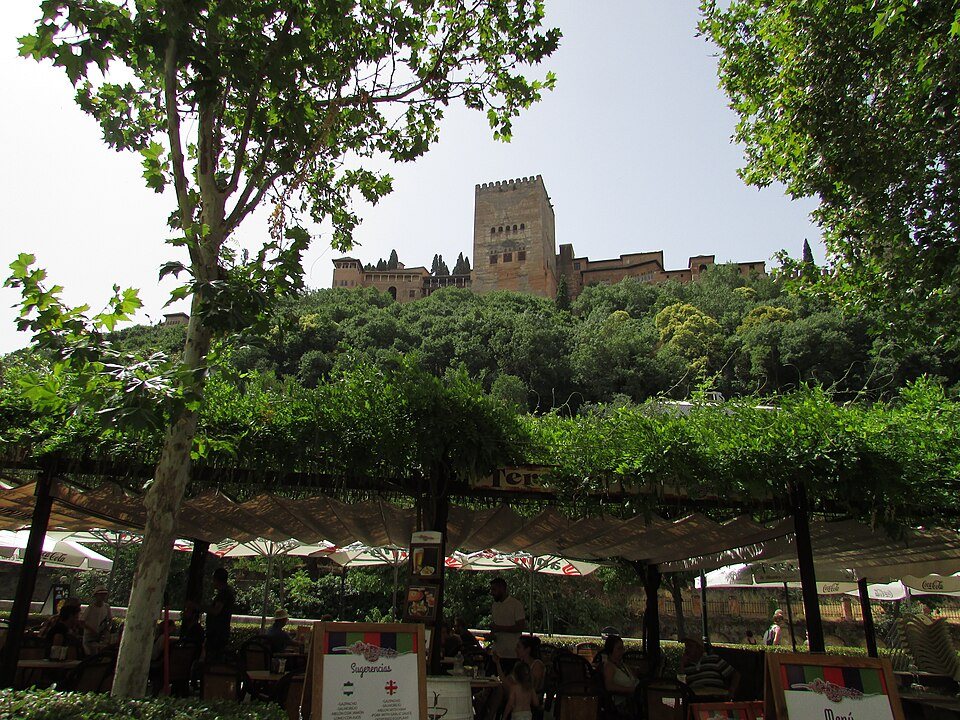
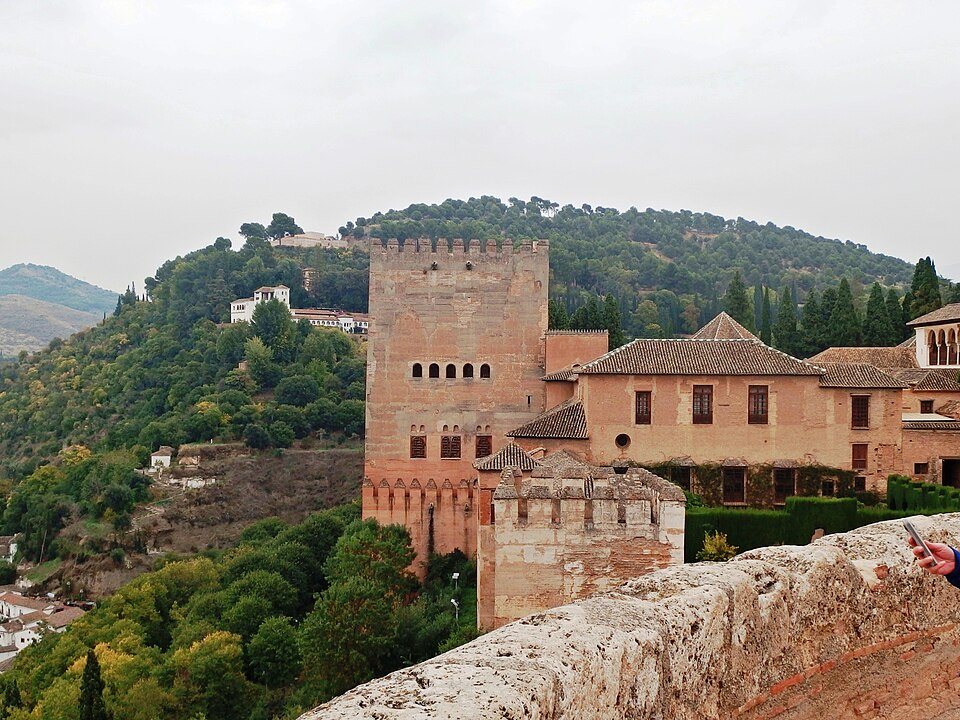
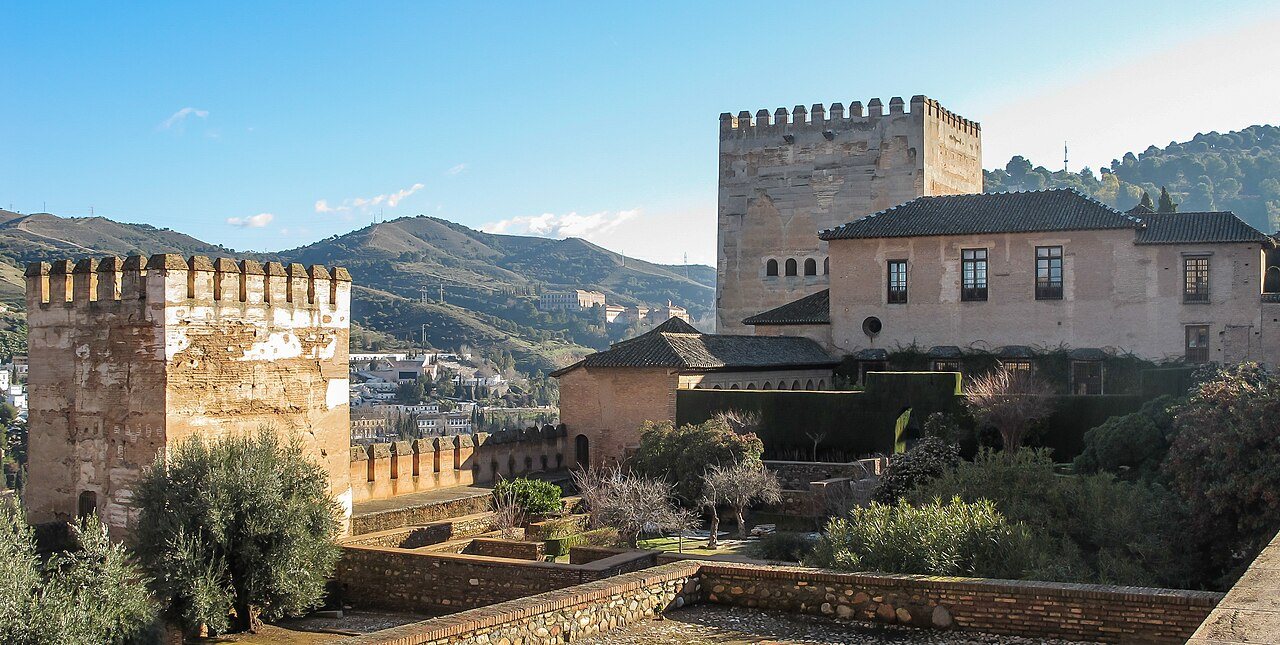
The Alhambra itself survived largely intact because Isabella and Ferdinand wanted it as a residence, not a ruin. Charles V, their grandson, later imposed his own mark more aggressively, demolishing part of the Nasrid winter palace to build the Palace of Charles V — a Renaissance building dropped into the middle of a Islamic-era palace complex, which still strikes most first-time visitors as strange rather than harmonious. That oddness is accurate. It was an imposition, not a blend.
Smaller buildings tell the same story at a domestic scale. The El Bañuelo baths near the Carrera del Darro survived mostly because they were repurposed rather than seen as worth destroying. Mosques across the Albaicín were converted into parish churches one by one through the early 1500s — you can still find a handful of these churches today whose floor plans, if you look at them with the mosque in mind, give away what they used to be.
Where to see this layered history today
- The Capilla Real — the actual tombs of Ferdinand and Isabella, plus a small but genuinely worthwhile museum of their personal effects and Isabella's art collection. See /capilla-real/.
- The Cathedral — built directly over the Friday mosque; its scale alone tells you how deliberately the new order marked the old center. See /catedral-granada/.
- The Albaicín — the Muslim quarter that remained standing after the Reconquista precisely because of the surrender terms, before those terms were revoked. Walk it with this timeline in mind rather than just for the views from Mirador San Nicolás. See /albaicin/ and /albaicin-sacromonte/.
- The Alhambra and Palacio de Carlos V — the clearest single site showing continuity and rupture side by side. See /the-alhambra/ and /palacio-carlos-v/.
⭐ If you only have time for one of these beyond the Alhambra itself, make it the Capilla Real. It's compact, it's a short walk from the cathedral, and it puts a human, mortal end point on a story that can otherwise feel abstract — these are not symbolic monarchs in a textbook, they are two coffins in a crypt a few streets from the mosque they replaced.
Why this matters for how you read the Alhambra
None of this is an argument against visiting or admiring the Alhambra, the Patio de los Leones, or the Generalife gardens — they're extraordinary on their own terms and the Palacios Nazaríes remain one of the best-preserved works of Islamic architecture anywhere. But knowing the aftermath changes what you're looking at. The Alhambra survived because it was useful to its conquerors as a palace, a symbol, and later a tourist draw — not because of any special protection extended to Islamic heritage generally. Most of that heritage, in the form of mosques, inscriptions, and the Muslim population itself, did not survive the following century in Granada.
For a fuller sense of the dynasty that built the palace before any of this happened, see the Nasrids; for planning a visit that covers these sites in a sensible order, see itineraries and getting around.
In pictures