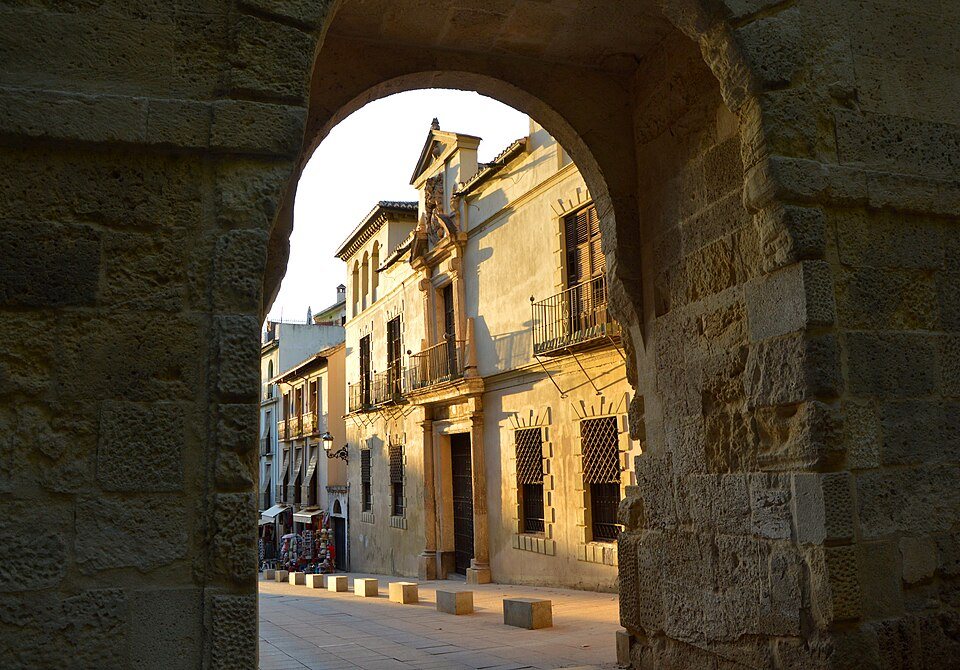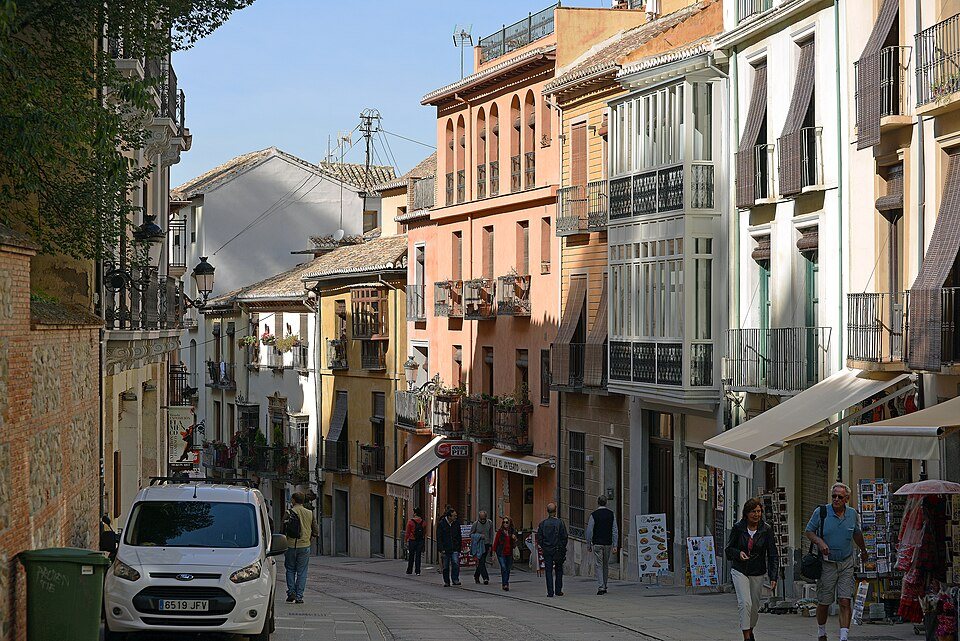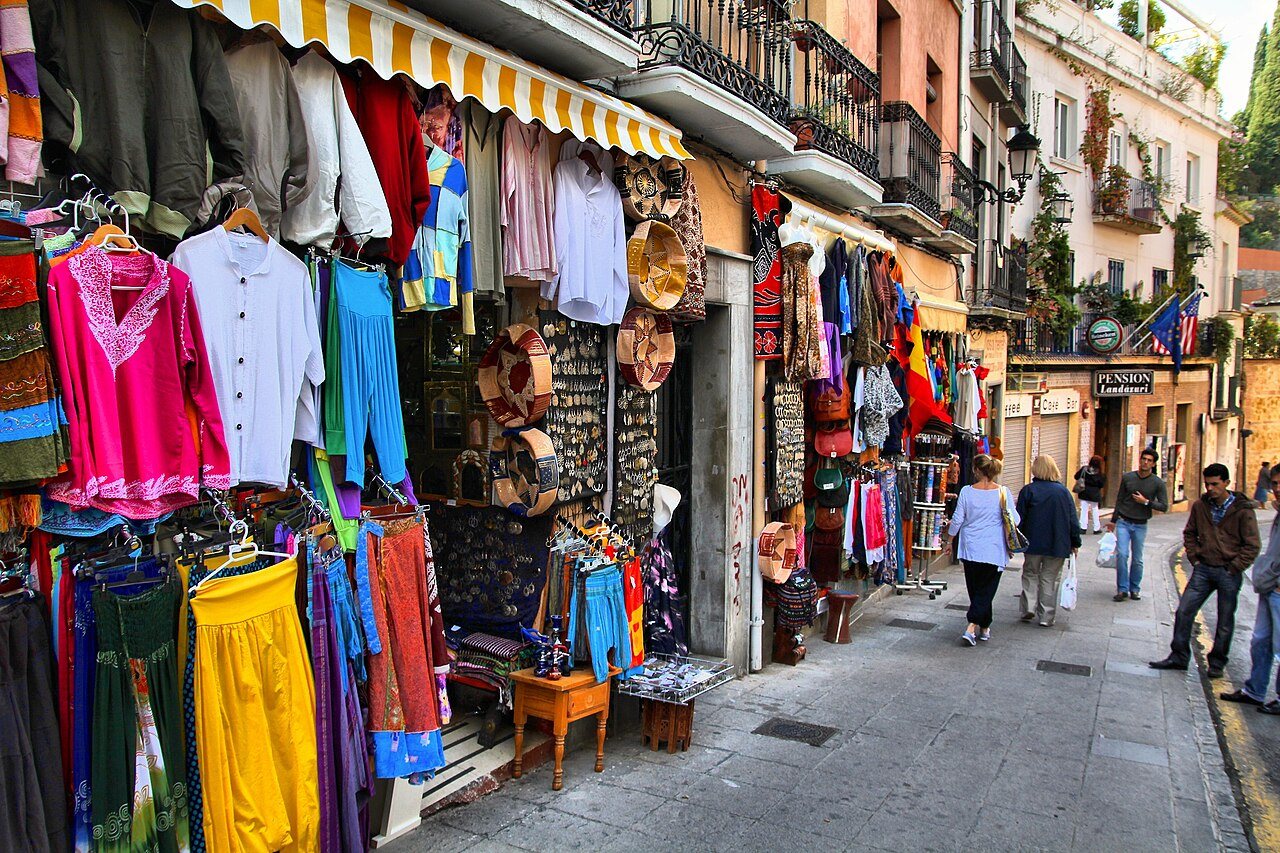
Granada looks flat on a phone screen, a cluster of red dots pinned close together in the city center. It is not flat. The old city folds over two hills separated by a ravine, and almost everything worth seeing sits partway up one slope or another. People who plan their day by walking distance alone end up exhausted by noon, not because they covered much ground but because they covered it at an angle.
This isn't a complaint about Granada — the hills are why the Albaicín has the views it has, and why the Alhambra sits where it does, watching the city rather than sitting in it. But a day here goes a lot better if you plan around the climb instead of discovering it mid-afternoon in the wrong shoes.
Why the slope changes everything
The two defining hills are the Alhambra hill (Sabika) on one side of the Darro ravine and the Albaicín on the other, with Sacromonte continuing the climb further east along the same ridge as the Albaicín. The river Darro runs between them, mostly culverted now, with Carrera del Darro and Paseo de los Tristes tracing its old course at the bottom of the valley. Anything that sounds like a short walk on a map — Plaza Nueva to the Mirador de San Nicolás, say — is in practice a sustained uphill walk on uneven, centuries-old paving, often with no shade and no flat stretch to recover on.
The paving itself is worth a specific warning. Much of the Albaicín and the approach to the Alhambra is cobbled or set with smooth, water-rounded stones that were never meant for modern shoe soles. ⚠️ Flat sandals, thin ballet flats, and anything without grip will make the descent worse than the climb — going down a wet or polished slope is where people actually slip, not going up.
The three climbs you'll actually face
It helps to think of Granada's sightseeing in three separate uphill expeditions rather than one continuous stroll.
- The Alhambra hill. The main pedestrian approach is the Cuesta de Gomérez, a steady climb from Plaza Nueva through trees to the ticket area and the Alcazaba. Inside, the complex keeps climbing and dropping between the Palacios Nazaríes, the Generalife, and the gardens connecting them — budget for a lot of stairs once you're already there, not just to get there.
- The Albaicín. This is the steepest ground in daily use in the city. Streets narrow into staircases, double back on themselves, and rarely run straight for more than fifty meters. The reward is the Mirador de San Nicolás, but reaching it on foot from the river means a genuine climb with no shortcuts.
- Sacromonte. Further east and higher still, the cave district climbs along the Sacromonte ridge above the Darro. The walk out from Paseo de los Tristes is scenic and shaded in parts, but it is longer and more exposed than it looks from below, and the return is all uphill if you've gone far.
Doing two of these in one day on foot, back to back, is where most people's plans fall apart. Doing all three is possible but only if you treat it as the day's main activity rather than a backdrop to it.
Minibuses, taxis, and when to just walk
Granada's answer to its own topography is a set of small, tight-turning minibuses that run routes a full-size bus couldn't manage. The C1 and C2 lines loop through the Albaicín and up toward Sacromonte and the Alhambra area respectively; routes and stops are posted at each stop and change occasionally, so check the current map rather than relying on an old description of the line. These minibuses are genuinely useful for the climb itself — not for crossing the city, but for the specific vertical stretch between the valley floor and the top of a hill.
⭐ If you're visiting the Alhambra and don't want to arrive already tired, taking a minibus up and walking down afterward is a reasonable trade: by the time you leave, your legs have already done the Palacios Nazaríes and the gardens, and a downhill walk back into the city is a much easier proposition than another climb.
Taxis exist and handle the hills without complaint, but they can't reach the narrowest Albaicín lanes — a short walk at each end is unavoidable no matter how you arrive. For Sacromonte, a taxi to the base of the walk and then proceeding on foot is often the more comfortable option than trying to flag one down partway up.
Building a day that doesn't fight the hill
The practical fix is sequencing, not fitness. Plan each day around one climb, not several, and let the order do some of the work for you.
- Visit the Alhambra in the morning, when the grounds are cooler and you have more patience for the internal stairs and distances once you're already inside. Entry to the Palacios Nazaríes is sold in a timed-slot system, so arrive according to the mechanism the official ticket seller describes, not according to how long you've guessed the walk up will take — being late for your slot is a common and avoidable problem.
- Save the Albaicín and Mirador de San Nicolás for late afternoon heading into evening, when the light is better for the view back across the ravine and the climb feels less punishing than at midday.
- Treat Sacromonte as its own outing, ideally not stacked onto the same day as the Alhambra. The caves and the walk out there reward unhurried time, and arriving tired from another hill does the district a disservice.
- Build in a flat stretch deliberately. The valley floor along Carrera del Darro and Paseo de los Tristes is one of the few genuinely level walks connecting the two hills, and it's also one of the most atmospheric stretches in the city — a good place to recover between climbs rather than a mere connector.
None of this requires particular fitness, just sequencing. The visitors who struggle in Granada are rarely the ones who can't walk uphill — they're the ones who didn't expect to, three times, in the same afternoon, in the wrong shoes. See itineraries for day plans built around this logic, and sights for what's actually at the top of each climb once you get there.
In pictures