If your Alhambra ticket says afternoon, you've actually got the easier version of the one-day problem. Mornings in Granada are compressed and anxious — people set alarms for sunrise slots and then spend the rest of the day catching up on sleep in a tapas bar. An afternoon slot means you get the whole morning to do the parts of the city that don't care what time it is, then arrive at the hill already warmed up instead of wrecked by a 7 a.m. train or a jet-lagged scramble.
The trick is not to over-plan the morning. Granada rewards a slow walk more than a checklist, and you need to arrive at the Alhambra gate with legs left in you — the site is bigger than photographs suggest, and the walk alone, from entrance to the far end of the Generalife, is a real hike in the heat.
Morning: the old city before the hill
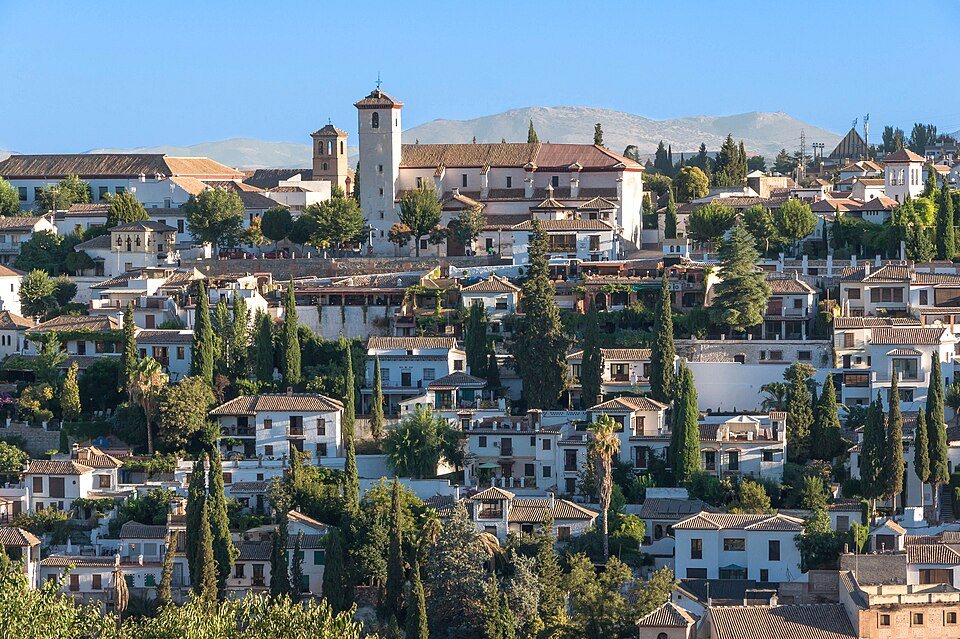
Start in the Albaicín, Granada's old Muslim quarter, while the streets are still cool and the tour groups haven't arrived. Walk up from Carrera del Darro — the river street under the Alhambra's walls, with the Bañuelo, an 11th-century hammam, tucked into one of the buildings on the right. It's unassuming from outside and easy to walk past.
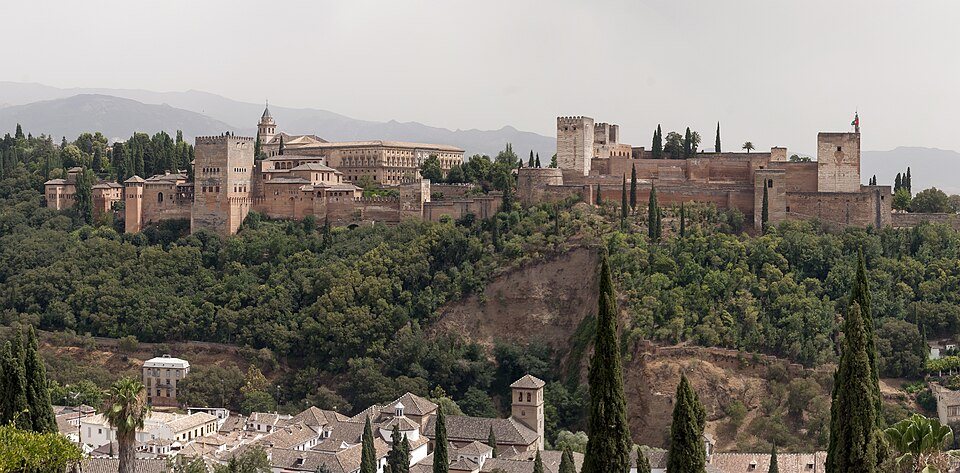
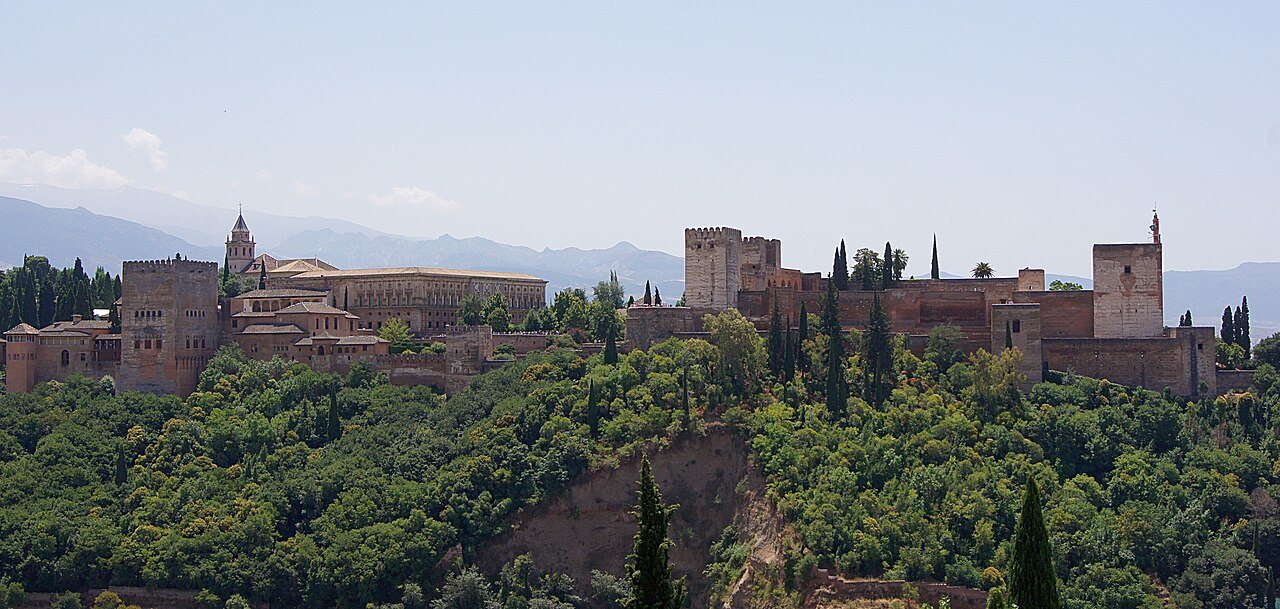
From there, climb into the Albaicín's tangle of alleys toward Mirador de San Nicolás. This is the view everyone has seen in photos — the Alhambra laid out against the Sierra Nevada — and it's worth doing in the morning rather than at the famous sunset, when the square is shoulder to shoulder. In the morning you get space to actually look, and you'll recognize the terraces and towers again a few hours later from the inside.
⭐ Have a coffee near the mirador rather than rushing straight back down. You're about to spend an afternoon on your feet; this is the one unhurried sit-down of the day.
Work your way back down through the Albaicín toward the center, rather than retracing your steps exactly — the quarter is built for wandering, and a wrong turn usually just means a quieter street. If sacred architecture interests you more than Moorish-era houses, a short detour toward Sacromonte and its cave district is possible, but it eats time you may want for lunch.
Midday: eat before you go up, not after
Have a proper lunch before heading to the Alhambra, not after. There is very limited food inside the complex, and what exists is not the reason you came. Granada's old-town tapas custom — a small plate arriving free with each drink — makes a wandering lunch easy: order a caña or a vermouth somewhere near Bib-Rambla square and let the bartender's tapa be your first course, then move to a second bar for the next round rather than sitting through a full sit-down meal. It's faster and more Granada than a formal restaurant lunch, and it leaves you free to stop whenever you've had enough.
⚠️ Don't drink lightly and then climb the hill in direct sun with a bag full of water bottles you forgot to drink. Bring water, and plan on a long uphill walk or a short bus ride up to the Alhambra ticket gates — see Getting Around for how the shuttle buses work from the center.
If your timed entry is specifically for the Palacios Nazaríes, the Nasrid Palaces, double check which hour printed on your ticket that applies to — it is usually a separate, narrower window from your general Alhambra entry, and it is the one slot that genuinely cannot be fudged. Arrive at the palace entrance, not just the grounds, with time to spare.
Afternoon: the Alhambra itself
Afternoon light inside the Alhambra has a particular quality — lower sun throwing long shadows across the courtyards, which is why photographers tend to prefer it to the flat light of midday. Structure your visit around your timed palace entry, then let the rest expand around it.
- If your slot is for the Nasrid Palaces, see the Alcazaba, the fortress section, either right before or after — it doesn't carry a separate timed entry and its tower views are worth the climb.
- Inside the palaces, the Patio de los Leones, the Court of the Lions, is the section people remember afterward, but don't rush past the smaller rooms around it — the carved stucco and tilework reward slowing down more than the courtyard itself does.
- The Palacio de Carlos V, a Renaissance palace dropped into the middle of the Nasrid complex, is worth a few minutes if only to see how bluntly a later Christian monarch asserted himself over the site. Its circular courtyard, square from outside, is the detail people miss when they walk past it to get to the palaces.
- Save the Generalife, the summer palace and gardens, for last. It sits apart from the main complex, involves more walking than people expect, and its gardens are better appreciated when you're not racing a clock to get somewhere else.
It's worth remembering, standing in these rooms, that the handover of the Alhambra in 1492 came with surrender terms that guaranteed the Muslim population's religion, property, and customs — and that those guarantees were dismantled within a decade. The palace's beauty and that history sit next to each other; neither cancels out the other.
Evening: downhill, unhurried
By the time you leave, afternoon light will be sliding toward evening, and the walk back down into the city is the natural place to decompress. If you still have legs for it, the Paseo de los Tristes, the riverside walk below the Alhambra's eastern wall, is a good route down, with the fortress walls lit up above you as the sky changes color.
Dinner afterward can be another round of tapas bars, or something sat-down and slower if you've earned it — either way, you'll have covered the Albaicín, a proper lunch, and the Alhambra itself in a single day without the 6 a.m. alarm that a morning slot demands. For other ways to sequence a Granada day, see Itineraries, and for what's realistic beyond a single day, Day Trips covers the obvious next step once the Alhambra is behind you.
In pictures