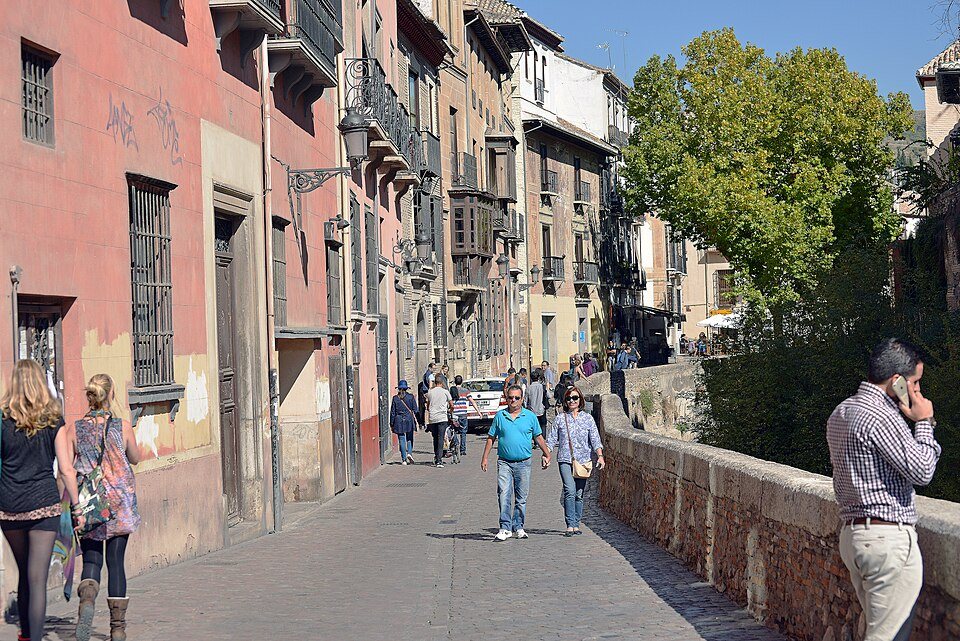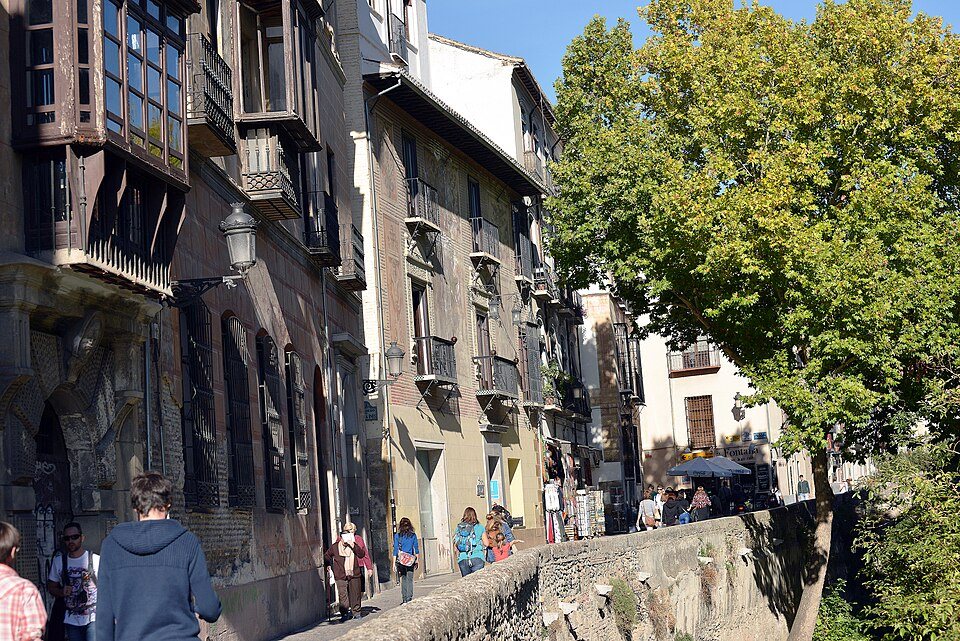
Most people walk past El Bañuelo without noticing it. That's partly the point of this article. On the Carrera del Darro, squeezed below street level between a row of ordinary buildings, a low doorway leads down into a set of brick-vaulted rooms that have been standing, more or less intact, since the eleventh or twelfth century. No minarets, no gilded ceilings, no crowds. Just a public bathhouse — and that ordinariness is exactly what makes it worth the ten minutes it takes to see.
What you're actually looking at
El Bañuelo — the name means roughly "the little bath" in Spanish, a diminutive given later, not its original name — is a hammam, a public bathing house built on the Roman and Byzantine model that Islamic cities across the Mediterranean adopted and refined. Granada had dozens of these once, attached to mosques and woven into the rhythm of daily life the way a barbershop or a corner bar is today. This is the one that survived, largely because after 1492 it was absorbed into a private house and its bath rooms were used as a laundry, which kept them standing instead of being demolished for something newer.
The layout follows a sequence you'd have recognized if you walked in a thousand years ago: a cold room, a warm room, a hot room, arranged so that a bather moved from one to the next, the way a sauna-and-plunge-pool circuit still works in parts of northern Europe today. The brick piers, horseshoe arches, and barrel vaults are original. So are the star- and octagon-shaped skylights punched into the ceiling, originally fitted with thick colored glass that let light in without letting the steam out. Standing under them at midday, with light falling in small bright shapes onto worn stone, is the closest thing the building offers to a money shot — but it's a quiet one, not a dramatic one.
Why an ordinary building matters
The Alhambra tells you how Nasrid sultans wanted to be remembered: poetry carved into plaster, water engineered to a whisper, rooms built for ceremony. El Bañuelo tells you something the palace can't — how a Friday in Granada actually worked for the people who weren't royalty. Bathing had a religious dimension (ritual purification before prayer) but also a civic one: hammams were where business got discussed, gossip spread, marriages got arranged by mothers sizing up prospective daughters-in-law. They were taxed, licensed, and regulated by the city the same way markets were.
That's worth sitting with for a second, because it's easy in Granada to see only the spectacular leftovers of a vanished elite and come away thinking the Nasrid period was wall-to-wall ornament. It wasn't. Most of the city that existed under Muslim rule looked like this: brick, plaster, function, modest decoration reserved for the places that could afford it. The Alcaicería silk market and the Corral del Carbón caravanserai nearby are the same kind of evidence — ordinary infrastructure that happens to have survived.
It's also worth remembering what happened to buildings like this after 1492. The terms of the surrender of Granada promised the Muslim population continued use of their mosques, baths, and properties. Those guarantees did not hold for long: within a decade, policies of forced conversion and then expulsion dismantled the institutions that buildings like El Bañuelo had served. The bathhouse survived mainly by accident — converted to other uses, forgotten, built over — not because anyone set out to preserve it.
Visiting it well
El Bañuelo is small enough that rushing it gets you nothing. Give yourself time to stand still in the main hot room and let your eyes adjust — the skylights are dim by design, and the shapes in the ceiling take a moment to resolve. Look at the capitals on the columns too; several were recycled from earlier Roman or Visigothic buildings, a common and practical habit in Islamic Granada rather than a sign of any particular reverence for the past.
- ⭐ Go in the late morning if you can. The skylights were built to catch overhead sun, and that's when the star-shaped light patterns on the floor are most visible.
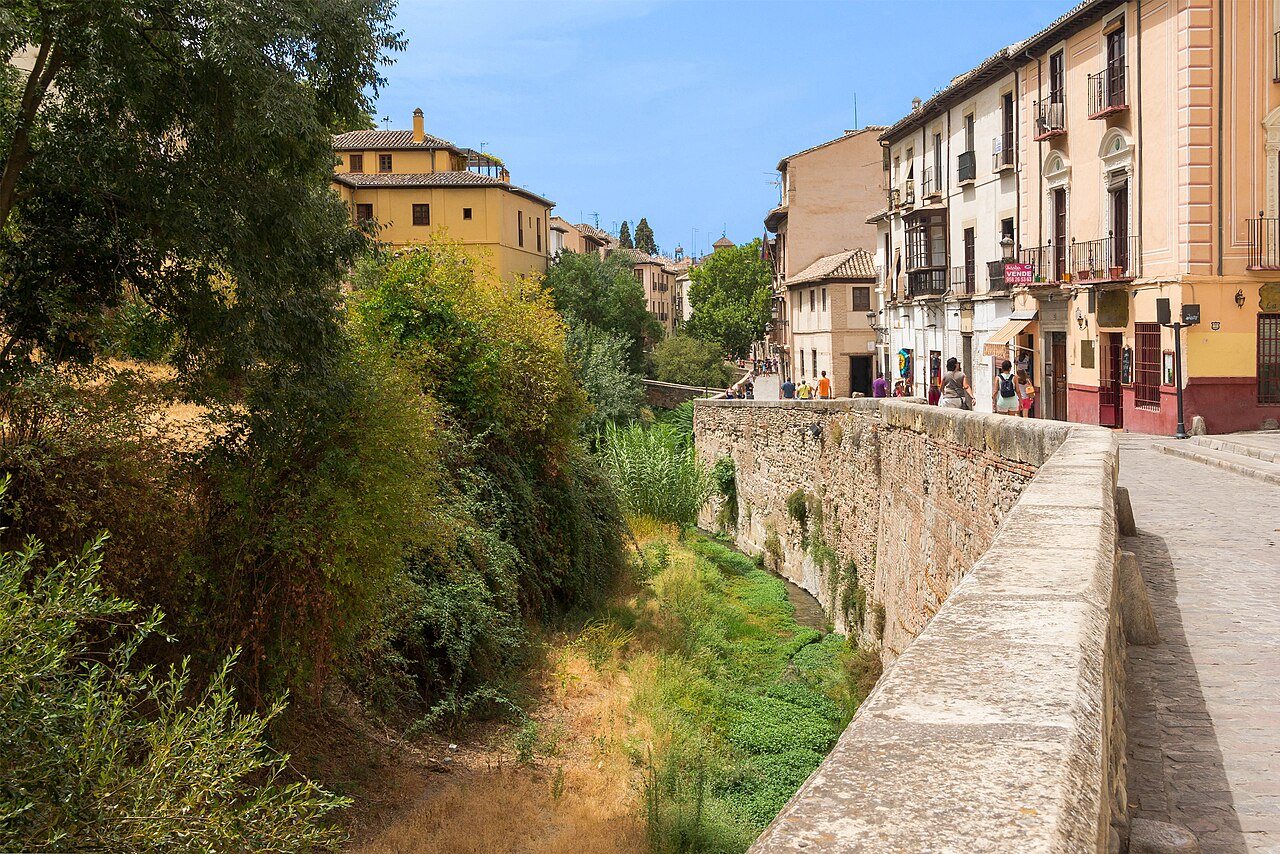
- ⭐ Pair it with the rest of the Carrera del Darro — this short riverside street is one of the few places in Granada where you can walk from a Nasrid-era bathhouse to a Renaissance bridge to a Baroque church front in a few hundred meters.
- ⚠️ The entrance is easy to miss. It sits below the current street level behind a plain door with modest signage — if you're looking for something monumental from the outside, you'll walk past it twice.
- Admission arrangements, hours, and any free-entry windows are set by the city's heritage office and change; check current terms before you go rather than relying on anything printed here.
What to see nearby
El Bañuelo sits at the base of the Albaicín, the old Moorish quarter that climbs the hill opposite the Alhambra, and it makes sense as the first stop on a walk upward rather than a destination on its own. From the bathhouse, the streets twist uphill toward the Mirador de San Nicolás, with the Alhambra's red walls filling the view across the valley — a useful piece of orientation, since it was this same river gorge, the Darro, that separated the royal city from the everyday one. A few minutes' walk in the other direction along the river brings you to the Paseo de los Tristes and the entrance roads up toward the Alhambra proper.
If you're building a half-day itinerary around the river, El Bañuelo works well as a cool, dim pause between the heat of the street and the climb ahead — practically as well as symbolically, since that's close to what it was built for in the first place.
In pictures