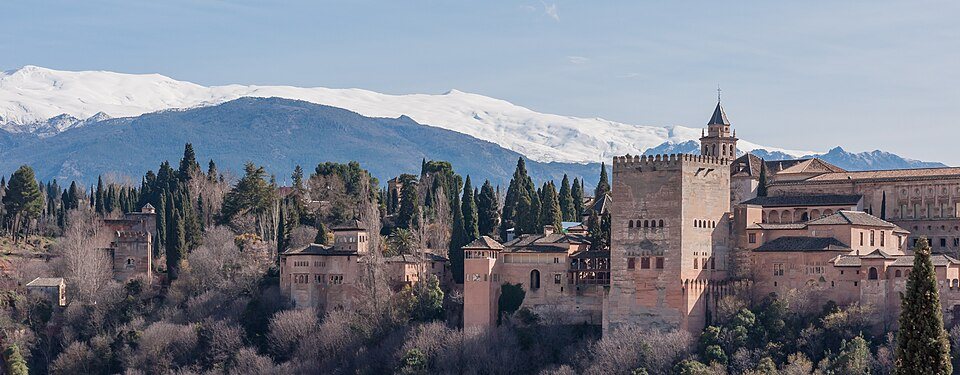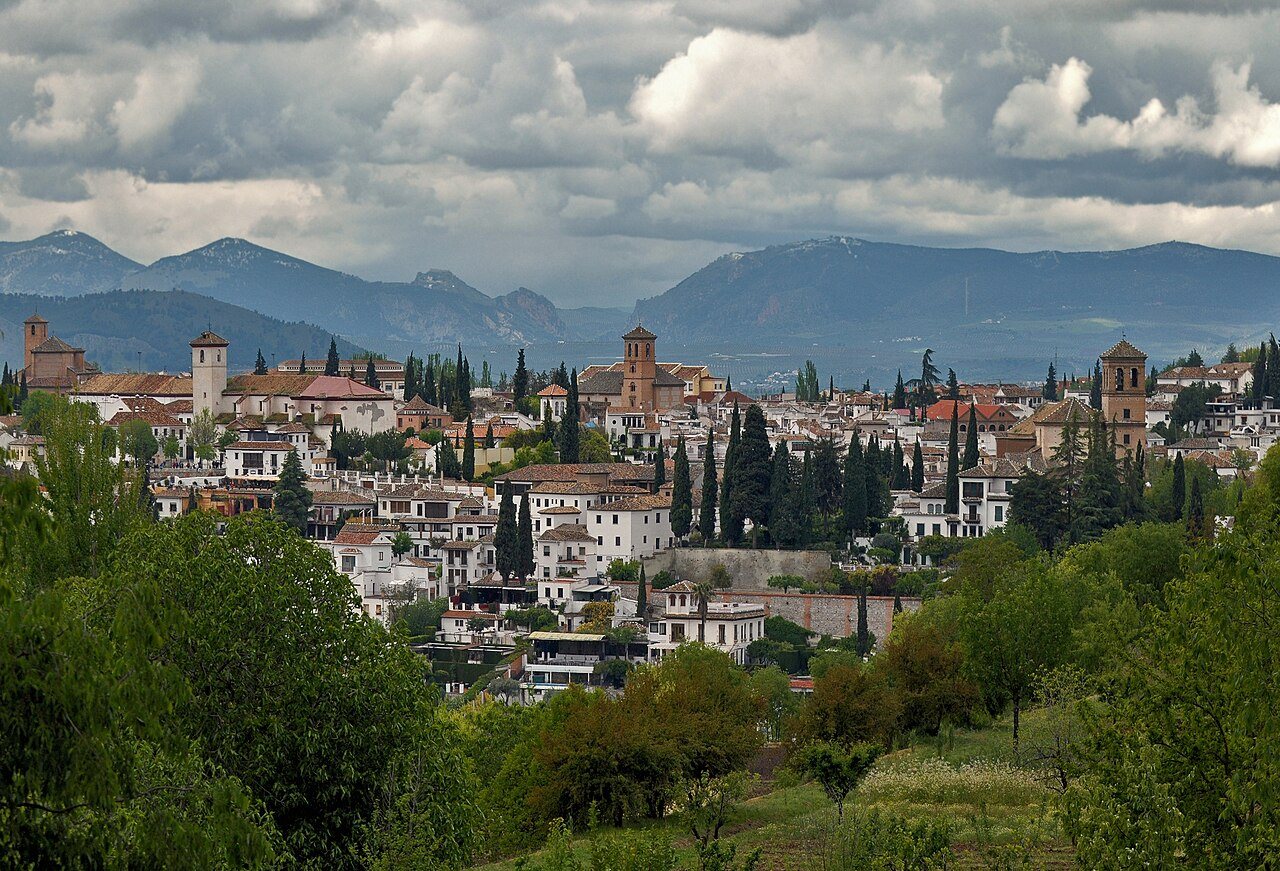
Most visitors to Granada spend their entire trip inside the triangle formed by the Alhambra, the cathedral, and the Albaicín, and never find out that the single most jaw-dropping interior in the city sits a couple of kilometers north of the center, largely ignored. The Cartuja — formally the Monasterio de la Cartuja, a Carthusian charterhouse — is not subtle. Where the Alhambra's decoration works by restraint, repetition, and the play of light on plaster, the Cartuja's sacristy is a sustained assault of carved and painted stone, marble, and wood, built by monks with apparently no budget ceiling and about two centuries to fill. If the Alhambra is poetry, this room is an opera that won't stop.
What you're actually looking at
The monastery was founded in the early sixteenth century, not long after the city's surrender to the Christian monarchs, and construction and decoration dragged on for generations. The church and the adjoining rooms were fitted out mostly in the seventeenth and eighteenth centuries, which is why the place feels less "Granada" and more full-blown Spanish Baroque tipping into Churrigueresque — the style named for the Churriguera family, where every surface sprouts twisted columns, broken pediments, and sculpted drapery that seems to be moving even though it's stone.
The sacristy, added in the 1700s, is the payoff. Walls and ceiling are worked in a pale local marble and stucco carved into undulating, almost liquid shapes — contemporaries called the material jaspe and the technique has sometimes been compared, not entirely as a compliment, to something baked rather than built. Cupboards and drawers for vestments line the room in inlaid wood, and the whole space keeps going right up into a cupola that drowns the room in light from above. It's disorienting in the way a hall of mirrors is disorienting: there's no flat, restful surface anywhere to let your eye settle.
Beyond the sacristy, the church itself has a sanctuary (the sagrario) finished in painted and gilded wood that reads almost gaudy in photographs and somehow isn't gaudy at all in person, because the color is handled with real control. There's also a refectory with a large Last Supper scene and a small museum of paintings depicting, with some relish, the martyrdom of Carthusian monks in England and France — not for the squeamish, and a reminder that this was a working monastic order with its own violent history, not a theme park.
The walk out there
The Cartuja sits north of the old city, past the university quarter, and the walk is part of the point rather than an inconvenience to minimize. From the cathedral area or Gran Vía, it's roughly a 30 to 40 minute walk depending on your pace and how many times you stop, most of it flat or gently uphill, through the Realejo-adjacent streets and then the university district around Calle San Juan de Dios and the Hospital Real. This isn't a scenic route in the postcard sense — you're walking through a functioning, workaday part of Granada, past university buildings, student bars, and ordinary apartment blocks — but that's exactly why it's worth doing on foot once: it shows you the city that exists outside the tourist zone.
⭐ If you'd rather not walk the whole way, city buses run up Gran Vía and out along the route toward the Cartuja; check current routes and stops before you set out, since numbering changes. See getting around for general orientation on Granada's bus system.
⚠️ There is very little shade on stretches of this walk, and almost nothing in the way of cafés or shops once you're past the university buildings and into the final approach to the monastery itself. Carry water, especially from late spring through early fall, and don't expect to buy anything near the entrance.
The monastery itself is a working, enclosed religious site, not a museum built for crowds, and the visiting mechanism reflects that: entry is through a set route with a ticket controlling access, hours are set by the religious community and can shift around services and holidays, and there's no substitute for checking the current schedule directly with the monastery or a reliable listings source before you commit to the walk. Don't assume it keeps the same hours as the Alhambra or the cathedral.
Making it part of a day
Because the Cartuja is a genuine detour from the historic center, it rarely fits neatly alongside an Alhambra visit on the same day — the two sites are on opposite sides of the city and each deserves unhurried time. A more realistic pairing is to treat the Cartuja walk as its own half-day: go out in the morning before the heat builds, spend thirty to forty-five minutes in the church and sacristy, and then loop back through the university district rather than retracing your steps exactly, which gives you a look at a slice of Granada that has nothing to do with the Nasrid city.
Some visitors combine the Cartuja with a look at San Jerónimo, another major monastery not far off on the way back toward the center, which has its own enormous Renaissance church and makes a natural second stop on the same walk — the two together give a much fuller sense of how much Christian building money and ambition poured into Granada in the century or two after 1492 than the Alhambra alone ever suggests. For broader context on how the city's monuments fit together chronologically, see the city and itineraries for suggested groupings by neighborhood and by day.
If you're trying to decide whether the detour is worth it: people who care about Baroque architecture, carved stone, or just want to see something in Granada that isn't Islamic-era decoration tend to come away from the sacristy genuinely stunned, often more so than they expected. People hoping for another dose of Alhambra-style intricacy will find it a jarring, almost opposite aesthetic — still worth seeing, but go in expecting excess rather than elegance.
Practical notes
- Wear comfortable shoes; this is a walking day, not a taxi-and-back errand, even if you do take a bus one way.
- Photography inside the sacristy and church may be restricted or limited to certain areas — follow posted signage and staff instructions rather than assuming you can shoot freely, since rules at working religious sites change.
- The monastery, like several of Granada's religious sites, is maintained partly through entry fees and donations; bring cash in case card payment isn't available at the point of entry.
- ⭐ Go on a weekday morning if your schedule allows — this is one of the few sights in Granada where you can plausibly have an entire room to yourself.
In pictures